





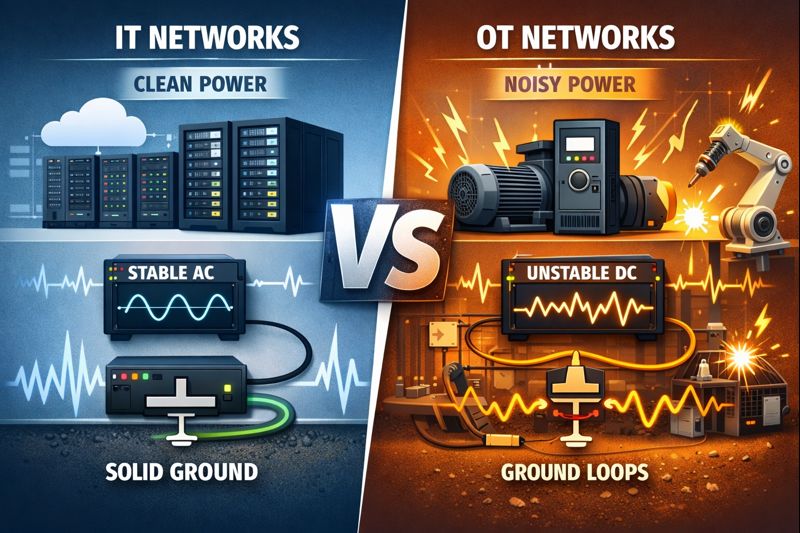
1. Why is power quality a major cause of network instability in OT?
Power quality is a major cause of network instability in OT because industrial power systems are electrically noisy and subject to rapid voltage fluctuations.
Motor starts, load switching,...
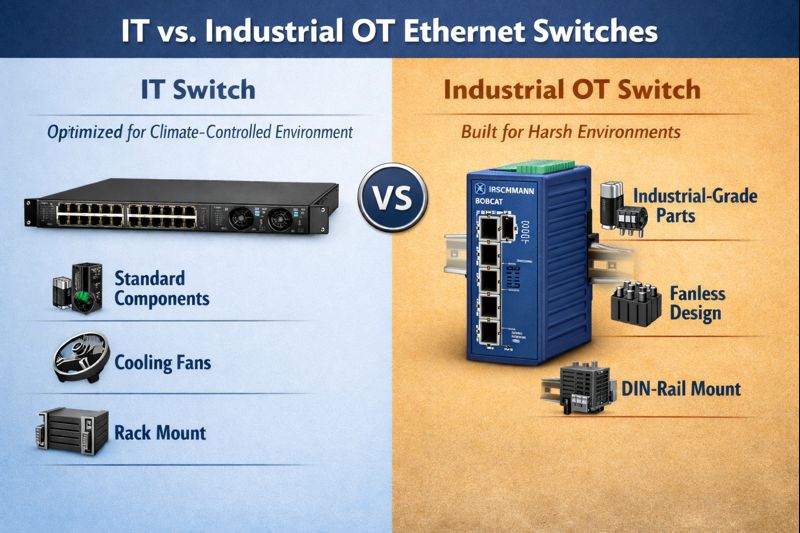
1. What makes an Ethernet switch “industrial grade”?
An Ethernet switch is considered industrial grade when it is designed to operate reliably in harsh, uncontrolled environments over long lifecycles.
Key characteristics include:
Wide operating...
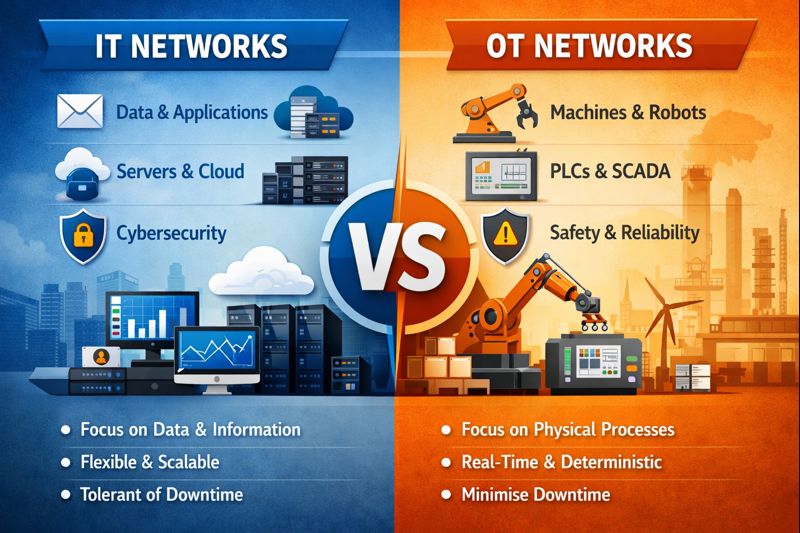
1. What is the difference between IT networks and OT networks?
IT networks are designed to move, store, and process information such as emails, databases, ERP systems, and cloud workloads. Their primary objectives are throughput, scalability, and user...
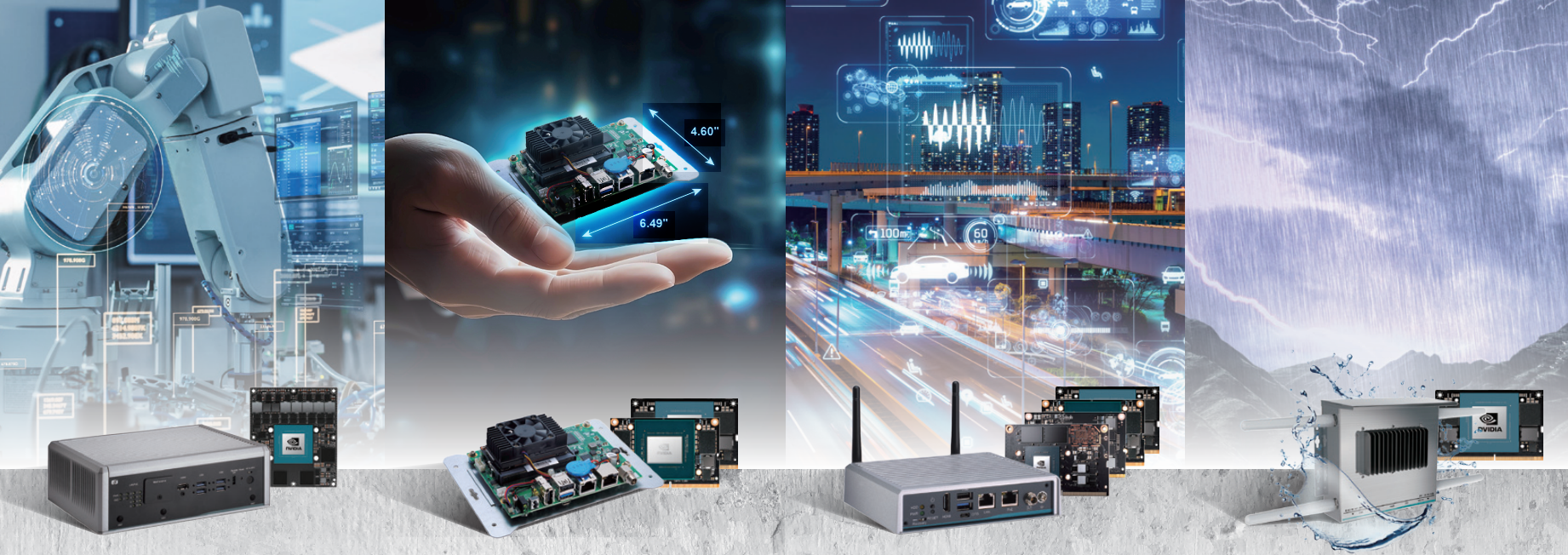
Industrial computers evolved from early programmable machines into rugged, specialised systems deployed in cabinets, machines, networks, and intelligent automation facilities.
1. What is a Computer?
A computer is a machine that takes inputs, processes...
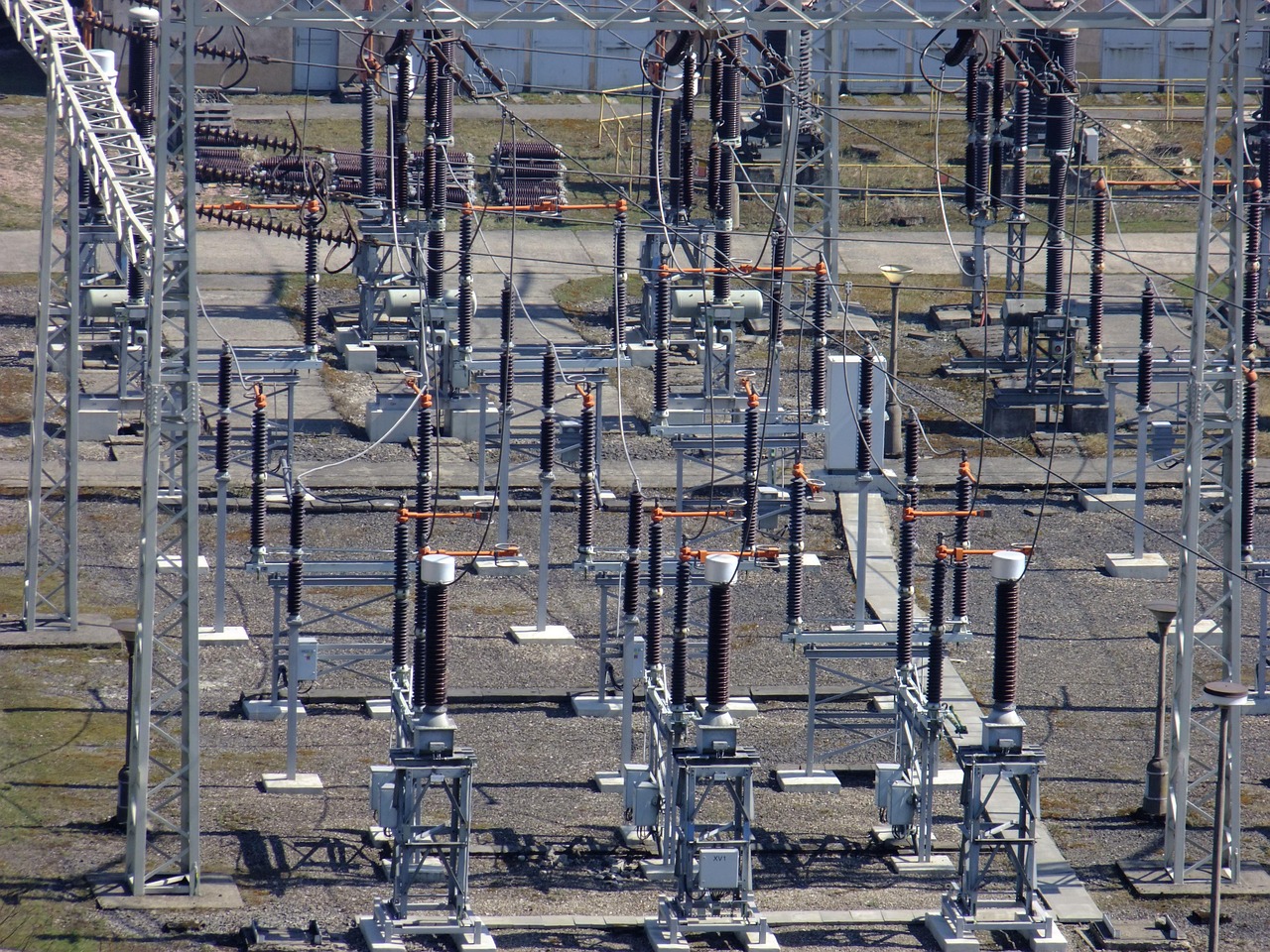
Introduction
In modern substation automation, reliability and zero downtime are not just desirable – they are essential. The IEC 61850 standard governs how devices in substations communicate, and within it, the use of redundancy protocols like...

Introduction
In the rapidly evolving landscape of industrial automation, seamless interoperability between different devices, systems, and platforms is crucial. Traditional industrial communication protocols often struggle with vendor lock-in, lack of...
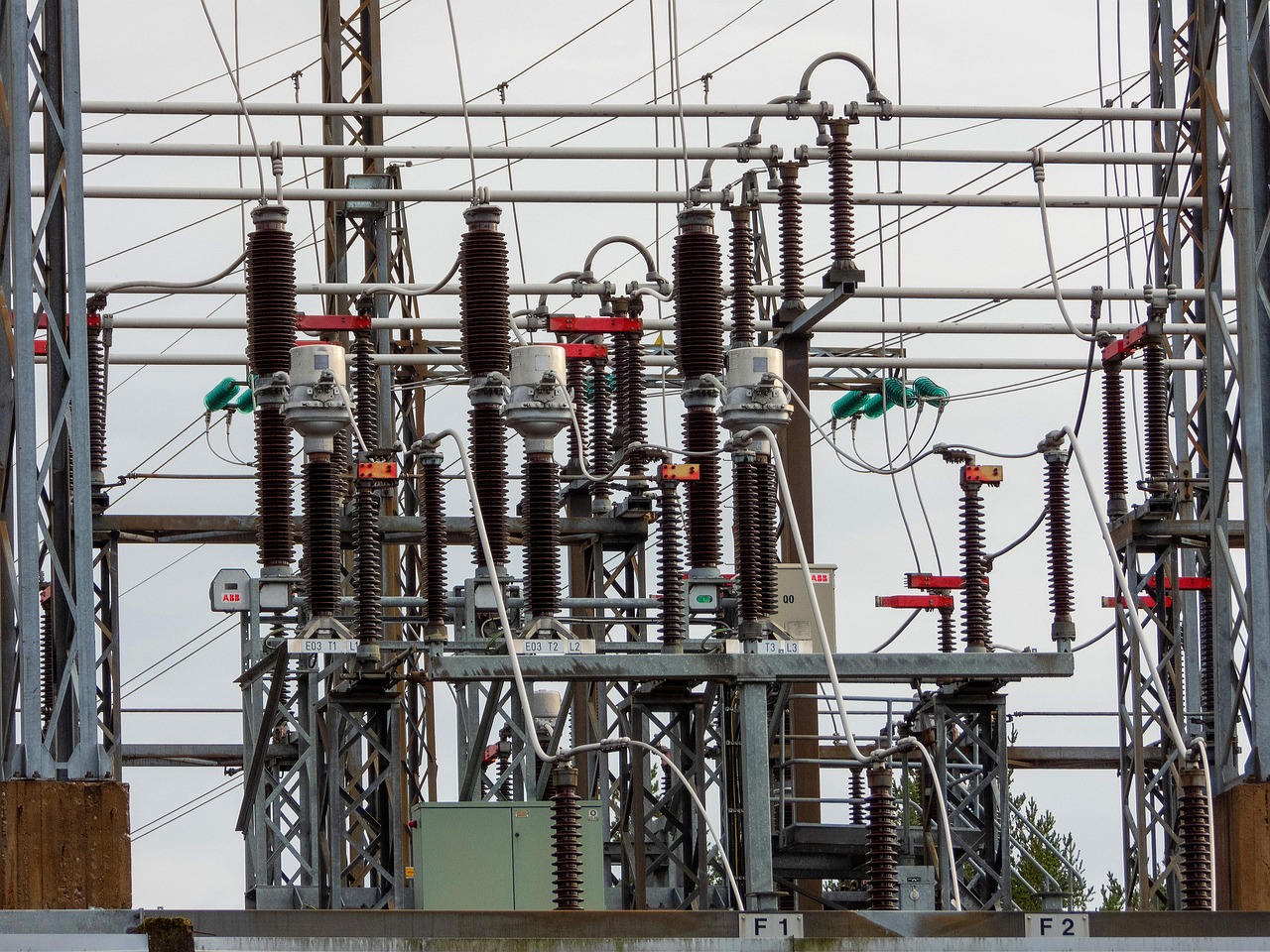
Introduction
IEC 61850 is a global standard for communication in electrical substations and power automation systems. To ensure high availability and fault tolerance, redundancy protocols such as Parallel Redundancy Protocol (PRP), High-availability...

Building Management Systems (BMS) rely on communication protocols to enable seamless integration between various components such as HVAC, lighting, security, and access control systems. These protocols ensure interoperability, real-time monitoring, and...

A Building Management System (BMS) is an integrated system used to control and monitor essential building functions such as HVAC (heating, ventilation, and air conditioning), lighting, security, access control, and energy management. Ethernet networking...